

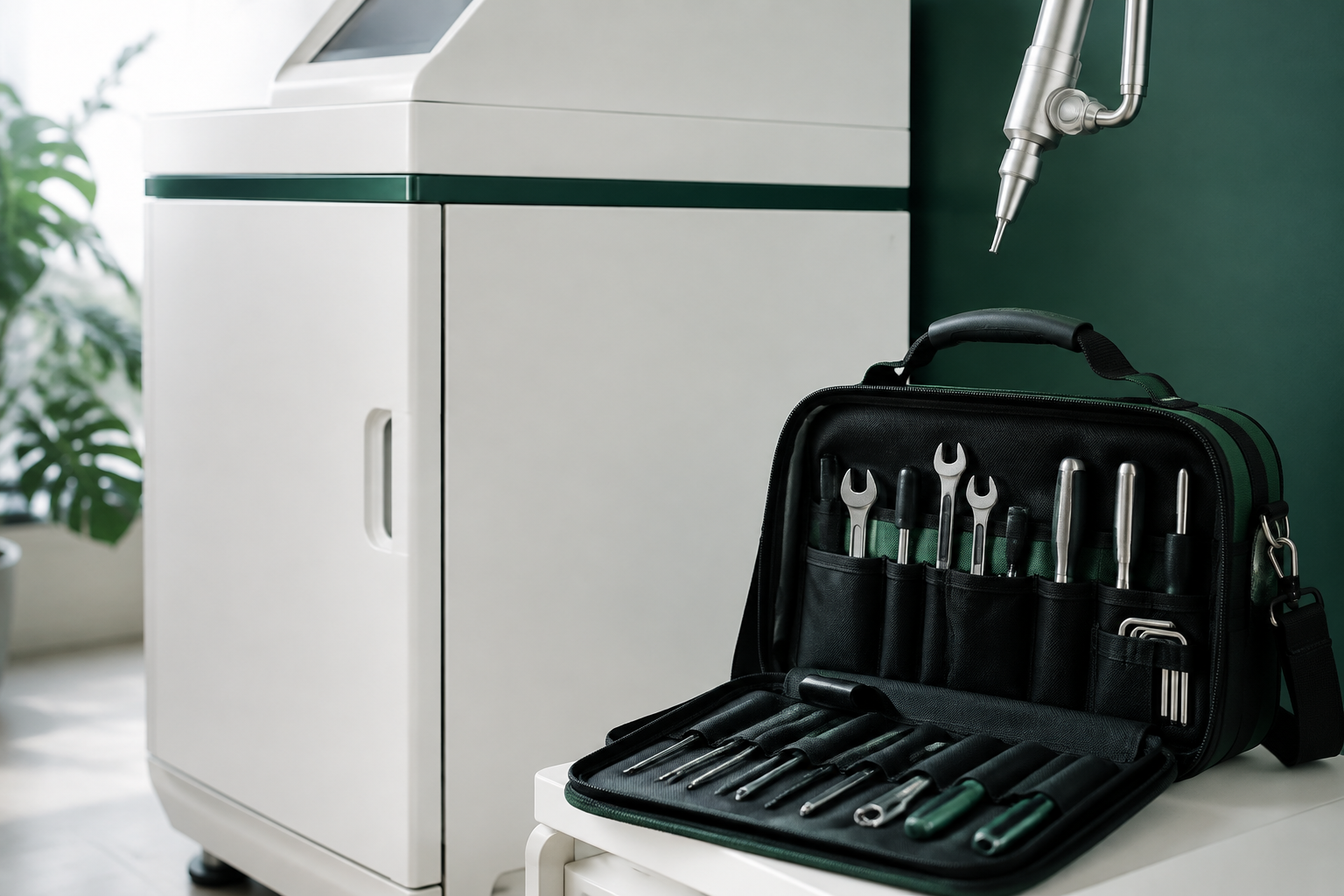
Clarify which tasks belong to the equipment team and which require manufacturer-authorized support.
Use the manual to define the boundary
Equipment teams benefit from knowing which routine tasks are assigned to operators and which are reserved for service personnel. That distinction must come from the current instructions for the exact JLT model and accessories. It should not be inferred from how accessible a component appears.
Ask for the boundary during handover
Have the supplier identify the relevant sections of the documentation and explain how support is requested. Record the service contact and the information normally needed for a case. This is especially useful when staff members are familiar with a different model and may expect the same procedures.
Avoid informal repair culture
A workaround that seems convenient can create uncertainty about equipment condition and responsibility. Do not open assemblies, adjust optics or bypass protective functions based on general advice. Follow the manufacturer’s escalation instructions and the organization’s process when a warning or unexpected condition occurs.
Keep completed work traceable
Where the applicable procedures require records, document routine care and authorized service separately. Include the device identity, date and relevant service reference. Clear records help future staff understand what was done and by whom. The aim is not to make operators into repair technicians, but to give each task a defined and supported owner.
Explore related JLT Medical information or contact our team for the current model-specific documentation.
Cover: AI-generated editorial illustration, not a photograph of a specific JLT product. This article is for equipment information and planning; follow the applicable instructions for use and qualified professional guidance.