

Clarify equipment identity, verification records and service responsibilities before accepting a CO₂ laser installation.
Ask for records that identify the device
A general statement that equipment is tested is not the same as a record associated with the delivered unit. During the purchasing discussion, ask what verification or calibration documentation is provided, how it identifies the device and which party is responsible for retaining it. The exact records depend on the model and supply agreement.
Understand the scope of the document
Ask the supplier to explain what was checked, under which procedure, and when. A record should be interpreted within its stated scope. It does not establish every possible operating condition or replace the current instructions for use. If a term is unfamiliar, request an explanation rather than assuming it means clinical validation.
Connect records to future service
Clarify which checks are required after installation, scheduled service or an authorized component replacement. Ask who is qualified to perform them and how reports are delivered. Do not attempt output measurement or adjustment with improvised tools; technical verification belongs within approved procedures.
Keep the history usable
Store documents where the equipment coordinator and authorized service team can retrieve them. Include model identity, document revision and service references in the index. The objective is a coherent history that supports equipment management and troubleshooting. A folder containing unrelated certificates is less useful than a small set of clearly identified records for the actual unit.
Explore related JLT Medical information or contact our team for the current model-specific documentation.
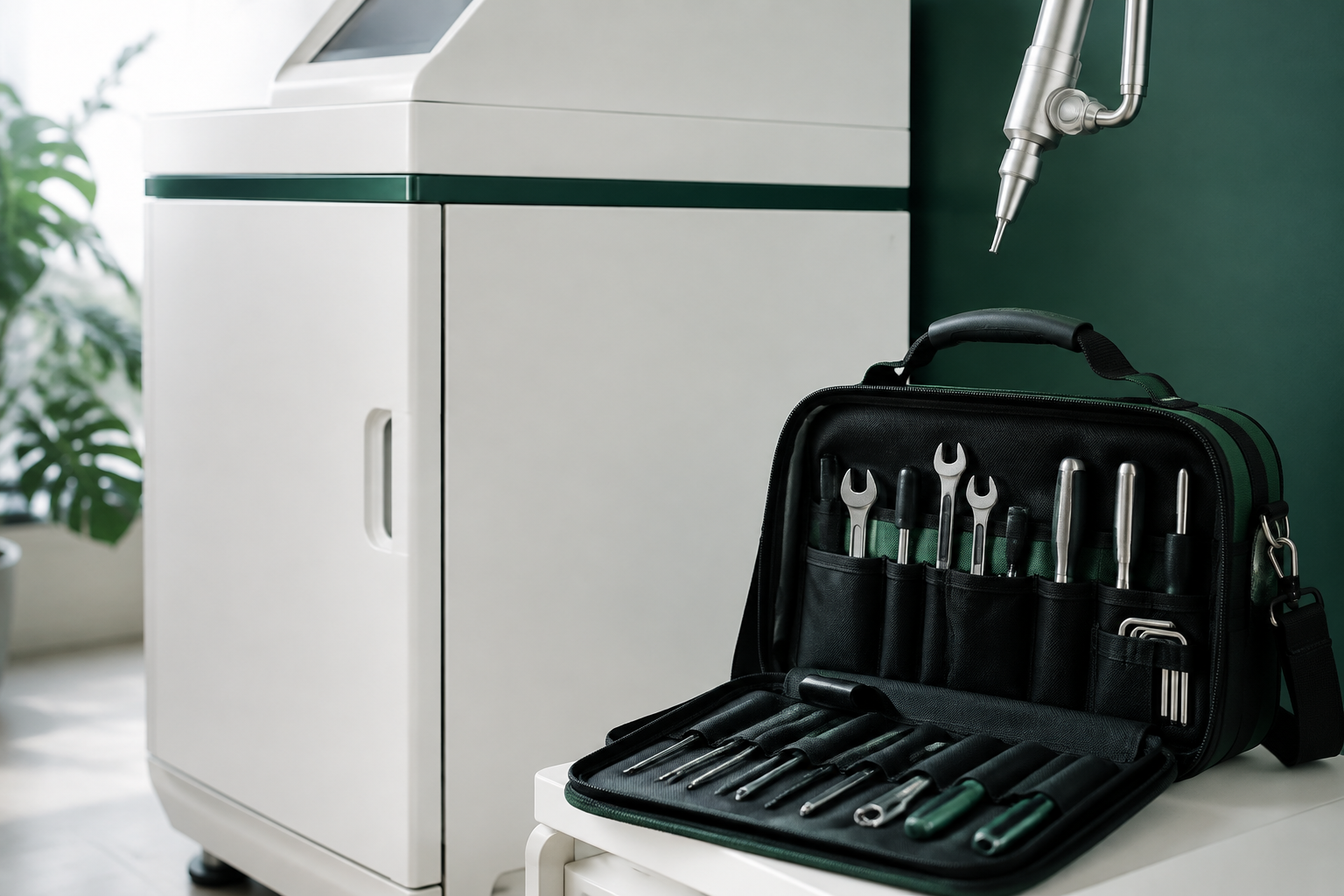
Cover: AI-generated editorial illustration, not a photograph of a specific JLT product. This article is for equipment information and planning; follow the applicable instructions for use and qualified professional guidance.